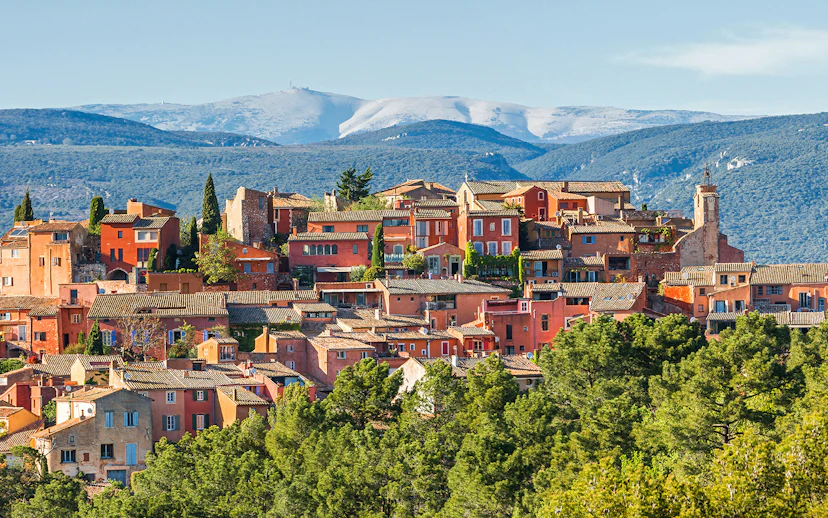
Hours, directions, entrances and the best time to arrive
Plan your Provence day trip
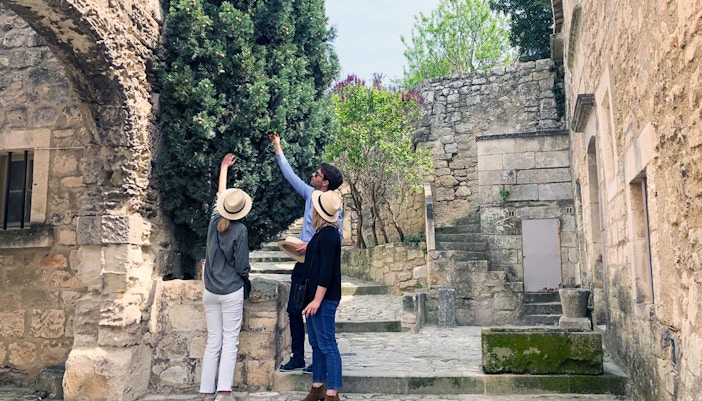
Provence is a region-wide day-trip destination best known for Roman monuments, hilltop villages, lavender landscapes, and Rhône Valley wine country. The experience is beautiful, but it’s rarely effortless: distances are longer than they look, public transport between smaller villages is patchy, and the best itineraries depend heavily on season. The biggest difference between a rushed day and a great one is choosing one theme — villages, history, wine, or coast — instead of trying to cram in everything. This guide helps you plan timing, routes, tickets, and what to prioritize.
Quick overview: day trips in Provence at a glance
If you want one fast planning read before you book, start here.
- When to visit: Most full-day tours run daily, usually departing around 8am–9am and returning around 6pm–7pm. Late spring and early fall feel much easier than July afternoons, and weekday mornings are noticeably calmer than peak summer weekends because lavender viewpoints, village parking, and major monuments all bottleneck at once.
- Getting in: Shared full-day tours usually start from about $80–$100, while wine-focused or private options climb higher. Book ahead for June–July, holiday weekends, and lavender season; outside peak months, last-minute availability is much better.
- How long to allow: 8–10 hours works for most visitors. Multi-stop routes, wine tastings, and scenic lunch breaks push you toward the longer end.
- What most people miss: The ochre trail in Roussillon, the museum at Pont du Gard, and late-afternoon light in villages like Gordes often add more than squeezing in one extra stop.
- Is a guide worth it? Yes for multi-stop countryside routes and wine days, because transport and sequencing matter more here than at a single monument; if you’re only doing one city-based stop, self-guided can work.
🎟️ Tours for day trips in Provence often sell out 1–2 weeks in advance during lavender season and major summer weekends. Lock in your visit before the departure time you want is gone. See ticket options
Jump to what you need
🕒 Where and when to go
🗓️ How much time do you need?
Visit lengths, suggested routes and how to plan around your time
🎟️ Which ticket is right for you?
Compare all entry options, tours and special experiences
🗺️ Getting around
How the region is laid out and the route that makes most sense
🏞️ What to see
Pont du Gard, Gordes, and Sénanque Abbey
♿ Facilities and accessibility
Restrooms, luggage, accessibility details and family services
Where and when to go
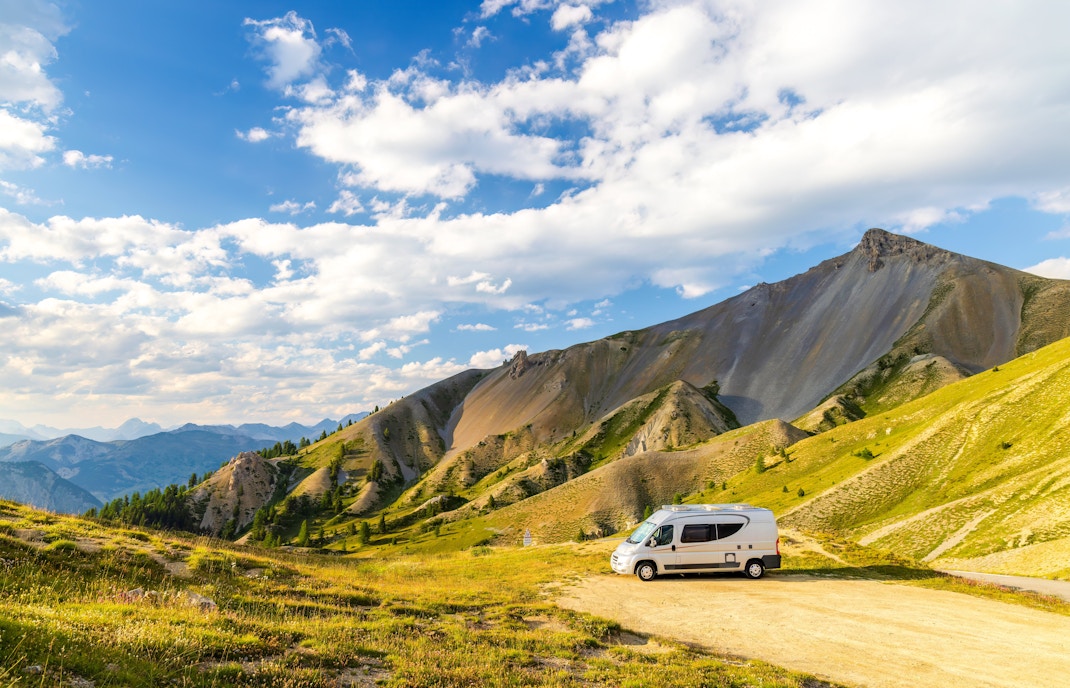
How do Provence day trips start?
Most Provence day trips start from Avignon, Aix-en-Provence, or Marseille rather than a single attraction entrance, so the key decision is your departure city, not one fixed address.
Departure point varies by tour and city.
→ Open in Google Maps
- Train: Avignon TGV or central Avignon → city-center transfer before departure → best for Luberon, Pont du Gard, and wine-country routes.
- Train: Aix-en-Provence TGV or central Aix → short transfer to meeting point → works well for Luberon villages and some lavender routes.
- Flight / rail: Marseille airport or Saint-Charles station → onward city-center pickup → best if you want Cassis or mixed coastal itineraries.
- Car: Self-drive works best for travelers who want fewer stops and longer lunches → parking is easiest outside village cores, not in them.
Full getting there guide
Getting here from nearby cities
Provence day trips are often built around a few practical bases, and your starting city shapes how much time you’ll actually get at the stops.
From Avignon
- Distance: 35–50km to many classic Luberon and river sites
- Travel time: 30–60 min via car or guided minibus
- Time to budget: This is the easiest base for fitting in 3–4 stops without the day feeling all transit-heavy
- CTA: Avignon to Provence tours and directions
From Aix-en-Provence
- Distance: 35km to Lourmarin and the eastern Luberon
- Travel time: About 35 min via car or guided minibus
- Time to budget: Good for village-focused days, though coastal add-ons can turn it into a longer full-day route
- CTA: Aix-en-Provence to Provence tours and directions
From Marseille
- Distance: About 50km to Aix, and longer for inland village circuits
- Travel time: 60–75 min before many inland itineraries properly begin
- Time to budget: Best if you want to pair Provence countryside with Cassis or a coastal extension, not if you want a short day
- CTA: Marseille to Provence tours and directions
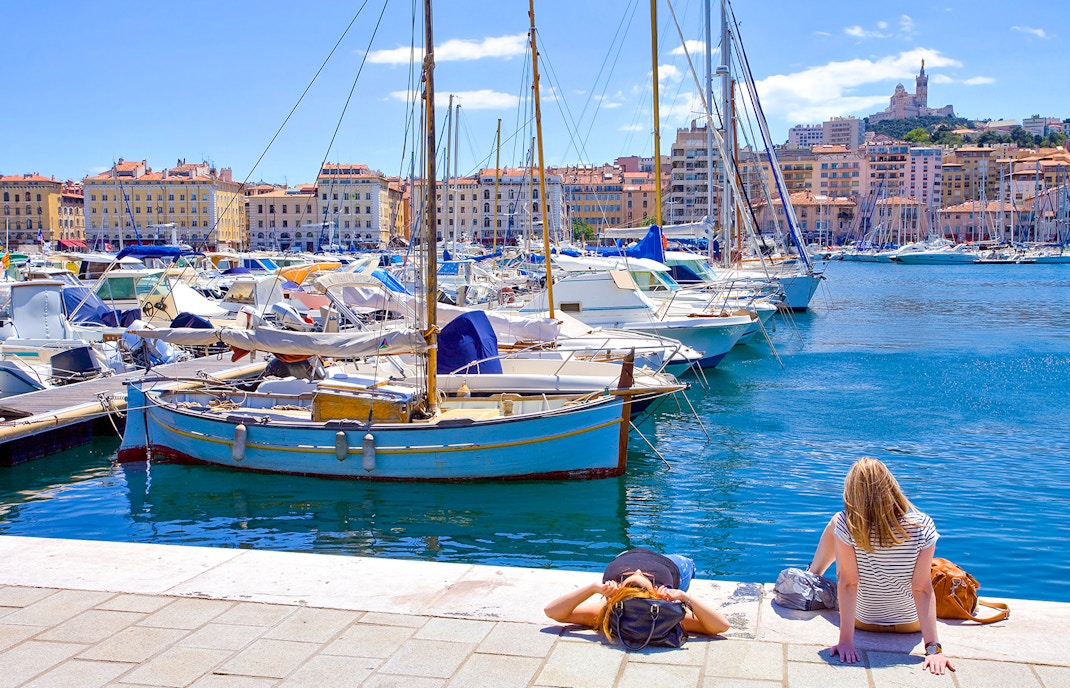
Which departure point should you use?
There isn’t one attraction entrance here — what catches people out is assuming every tour includes hotel pickup. Shared tours usually use fixed city-center meeting points, while private tours are much more flexible.
- City-center meeting point: Located in Avignon, Aix-en-Provence, or Marseille. Best for shared tours. Expect a 10–15 min check-in during summer mornings.
- Hotel pickup: Located at selected central hotels. Best for private tours or premium small-group departures. Expect a short pickup window rather than a fixed queue.
- Cruise-port pickup: Located at Marseille cruise terminals when offered. Best for shore-excursion travelers. Expect earlier departures to account for port logistics.
Full entrances guide
When are day trips in Provence running?
- Monday–Sunday: Most full-day tours depart around 8am–9am and return around 6pm–7pm
- Half-day routes: Usually run in the morning or late afternoon depending on the theme
- Lavender season tours: Peak departures run from late June through July
- Last check-in: Usually 15–30 min before departure
When is it busiest? July and August, especially weekends and late mornings, are the hardest days because lavender viewpoints, village centers, and headline monuments all fill at the same time.
When should you actually go? Late May, early June, September, and October usually give you easier roads, softer light, and more breathing room in Gordes, Roussillon, and Avignon.
How much time do you need?
| Visit type | Route | Duration | Walking distance | What you get |
|---|---|---|---|---|
Highlights only | Avignon or Aix → 2 Luberon villages or 1 major monument + 1 village → return | 5–6 hrs | ~2–4km | A clean introduction to Provence with viewpoints, one proper stop, and one shorter visit; you’ll skip deeper museum time, wine tastings, and slower lunch breaks. |
Balanced visit | Avignon → Gordes → Roussillon → Sénanque Abbey or Fontaine-de-Vaucluse → return | 8–9 hrs | ~4–6km | This is the sweet spot for most visitors: enough time for villages, photos, and a sit-down break without turning the day into a sprint. |
Full exploration | Avignon or Marseille → monument + villages + tasting or coastal add-on → return | 9+ hrs | ~6–8km | You’ll cover Provence properly, but it’s a long day with more van time, more walking on uneven streets, and less flexibility if one stop runs late. |
Which day trips in Provence ticket is best for you
| Ticket type | What's included | Best for | Price range |
|---|---|---|---|
Shared half-day villages tour | Round-trip transport + driver-guide + 2–3 village stops | A shorter Provence taste when you want scenery and village time without committing your whole day | From $60 |
Shared full-day Provence highlights tour | Round-trip transport + guide + multi-stop countryside route + selected admissions depending on itinerary | A first regional overview where you want logistics handled and several classic stops in one day | From $80 |
Châteauneuf-du-Pape wine tour | Transport + guide + winery visits + tastings | A wine-focused day where the cellar bookings and driving are more hassle than the price difference | From $120 |
Pont du Gard and Roman heritage tour | Transport + guide + Roman-site route + monument access depending on itinerary | A history-heavy day where you want context at sites that feel less rewarding if you just walk through them | From $110 |
Private custom Provence day tour | Private vehicle + guide + flexible itinerary + custom pacing | A day where you want to choose the stops yourself and avoid wasting time on places that don’t match your interests | From $300 |
How do you get around day trips in Provence?
Provence is best explored by road, not on foot — the headline stops are spread across valleys, vineyard country, and small historic towns. The region is easy to understand once you think in clusters rather than individual sights.
The main Provence clusters sit inland from your departure city: Avignon and Pont du Gard to the west, Luberon villages to the east, Châteauneuf-du-Pape to the north, and Cassis and the Calanques closer to the coast.

Main Provence clusters
- Avignon and Pont du Gard corridor: Papal history, Roman engineering, and the easiest first-time pairing → budget 3–5 hours if you focus on history.
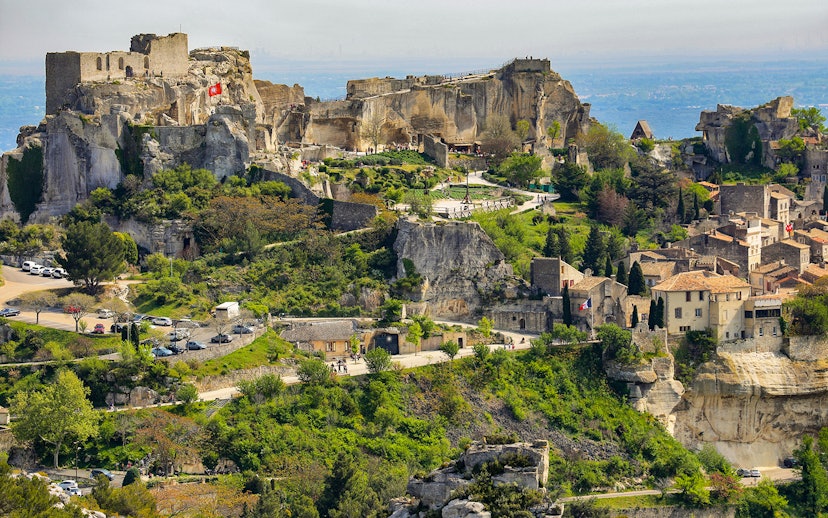
- Luberon villages: Gordes, Roussillon, and nearby abbeys and viewpoints → budget 4–6 hours because parking, walks, and photo stops all add time.
- Châteauneuf-du-Pape wine country: Village viewpoints, cellar tastings, and vineyard drives → budget 3–5 hours, longer if you visit 3 wineries.
- Cassis and Calanques: Coastal town time plus a boat cruise or scenic shoreline stop → budget 4–6 hours with transfers.

Maps and navigation tools
- Map: Downloaded regional map or route plan → covers villages, monuments, and driving legs → save it before you leave your departure city.
- Signage: Good on main roads, weaker inside small hilltop villages → a downloaded map genuinely helps once streets turn pedestrian-only.
- Audio guide / app: Useful at individual monuments like the Papal Palace, but not a substitute for route planning across the region.
- Large outdoor POIs only: Offline GPS is worth having for the Luberon and other rural stops where poor signal can turn short detours into long ones.
💡 Pro tip: Don’t navigate Provence stop by stop while you’re already on the road — lock your full route before departure, because village one-way systems and parking detours waste more time than the drive itself.
Get the day trips in Provence map / audio guide
What is Provence worth visiting for?
1/7
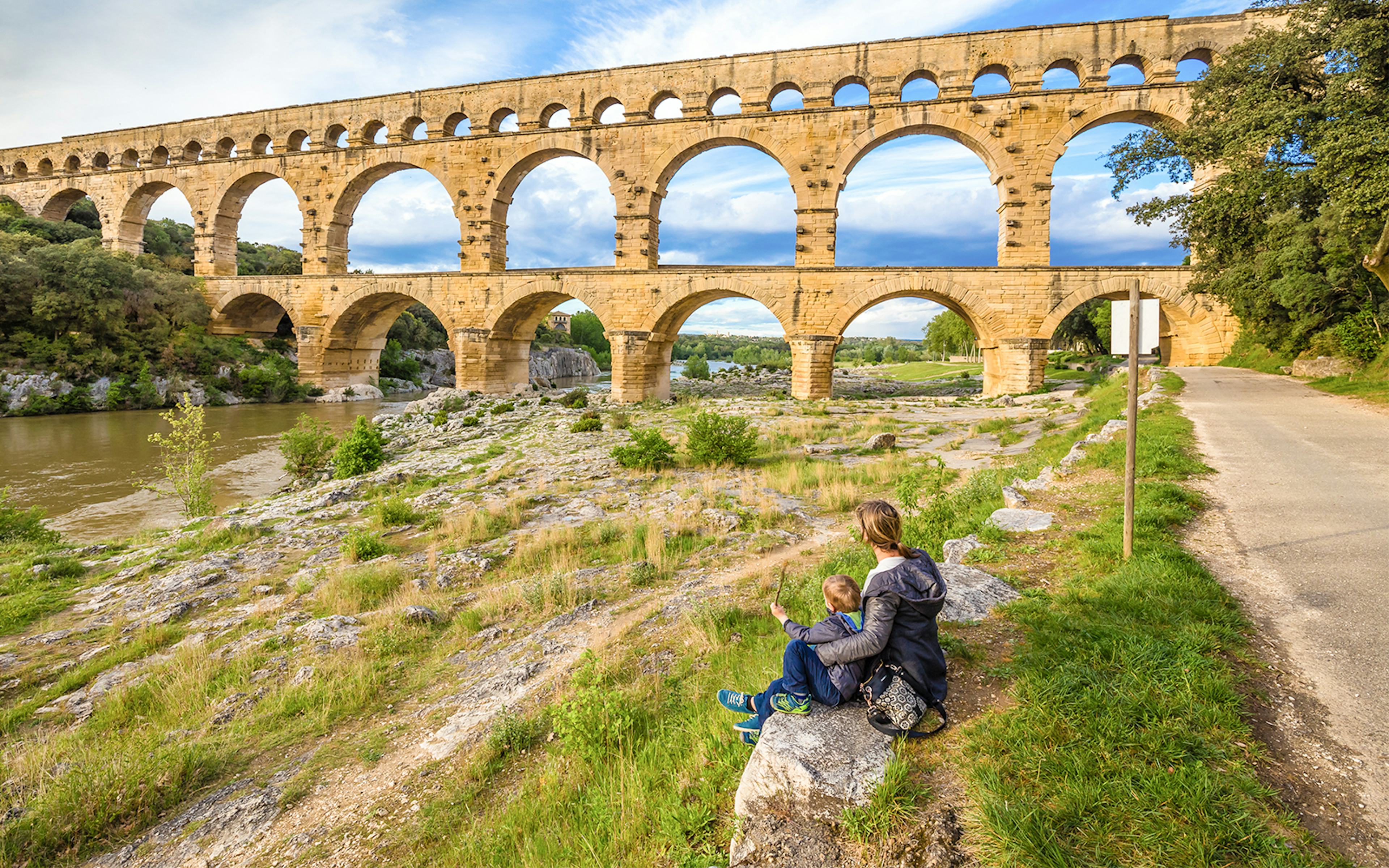
Pont du Gard
Era: 1st century Roman aqueduct
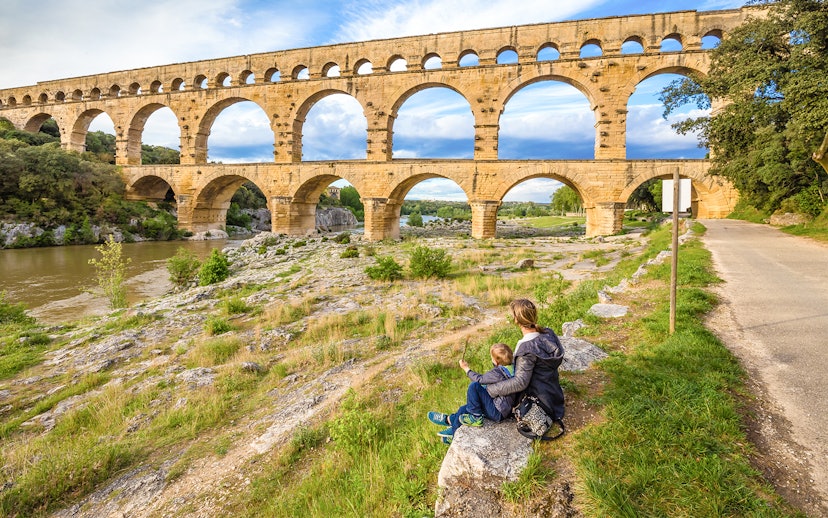
This is Provence’s most impressive Roman monument, and it still feels oversized even after you know the numbers. Most visitors photograph the bridge, then move on too quickly; the museum and multimedia exhibits are what make the engineering logic click. In summer, the riverbank also changes the pace of the stop completely if you build in time to linger.
Where to find it: Near Vers-Pont-du-Gard, around 30 minutes from Avignon on west-facing history routes
Papal Palace of Avignon
Era: 14th-century Gothic palace
The Papal Palace is one of those places that’s much bigger and more fortress-like than first-time visitors expect. The state rooms and chapels matter, but the Histopad-style interpretation is what helps you read the empty spaces properly instead of just walking through stone halls. Many visitors also underestimate how crowded the courtyard and entry flow can get during festival periods.
Where to find it: Central Avignon, best paired with other west-Provence historical stops
Gordes
Type: Hilltop village
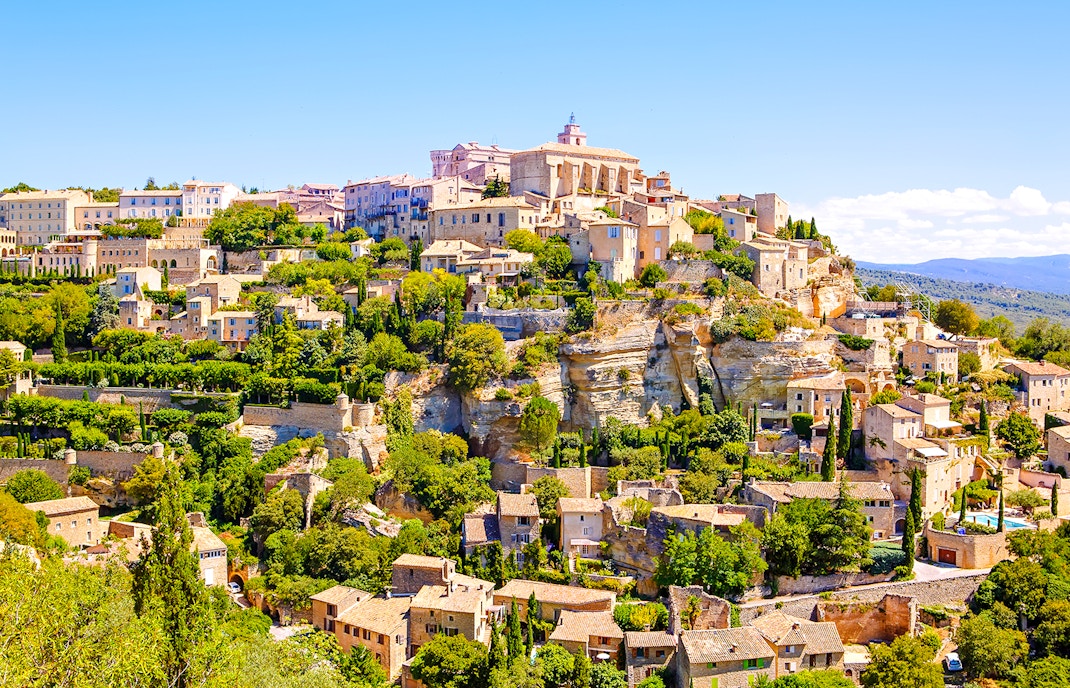
Gordes is the classic postcard village, but the real payoff is the layered view of the stone houses from outside town before you ever start walking. Inside, the streets are compact and steep, and most visitors rush the viewpoint instead of giving themselves time to explore the lanes. Parking and arrival timing matter here more than almost anywhere else on a Provence day route.
Where to find it: Luberon circuit, around 40–60 minutes from Avignon depending on traffic
Roussillon
Type: Ochre village and landscape stop
Roussillon feels visually different from the rest of Provence because of its red and orange ochre stone, which makes it more than just another village stop. The part people miss is the ochre trail itself; many take a few photos in the center and leave without seeing the earth tones that made the village famous. Late-afternoon light is especially good here.
Where to find it: Luberon route, usually paired with Gordes on a full-day villages itinerary
Sénanque Abbey
Era: 12th-century Cistercian abbey
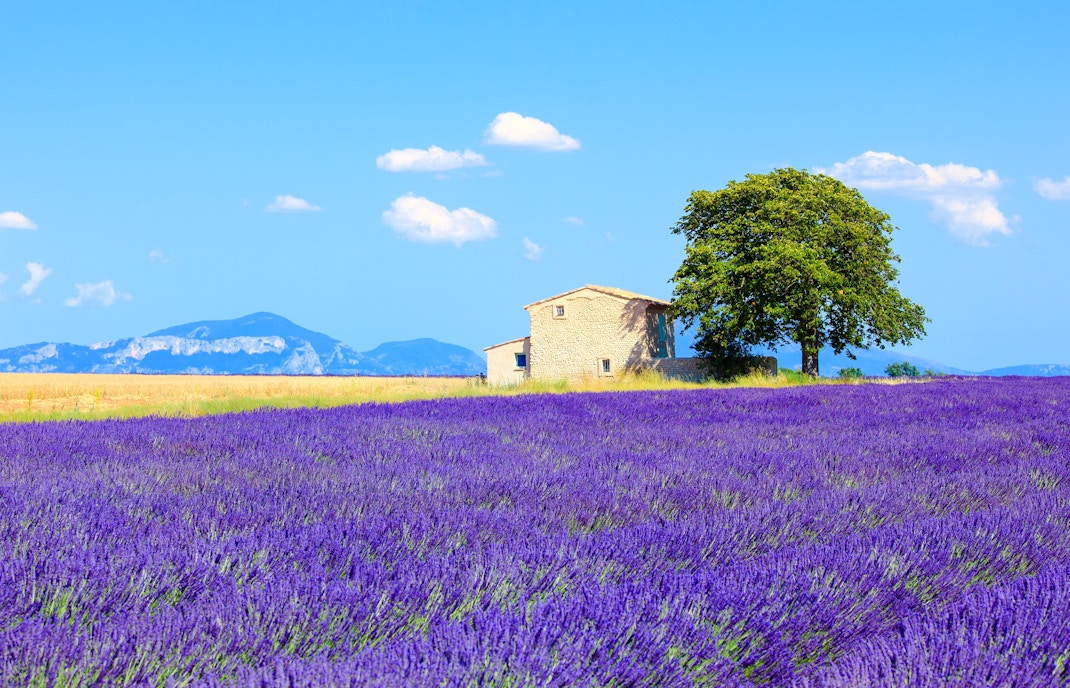
This is the image most people have in mind when they imagine Provence in lavender season: a simple stone abbey framed by purple rows. What gets missed is how brief the visit can feel if you arrive only for a quick photo stop, especially outside bloom season. The short walk in and the valley setting are part of the experience, so don’t treat it as a drive-by.
Where to find it: Just outside Gordes, on classic lavender and Luberon routes
Châteauneuf-du-Pape
Type: Wine village and tasting stop
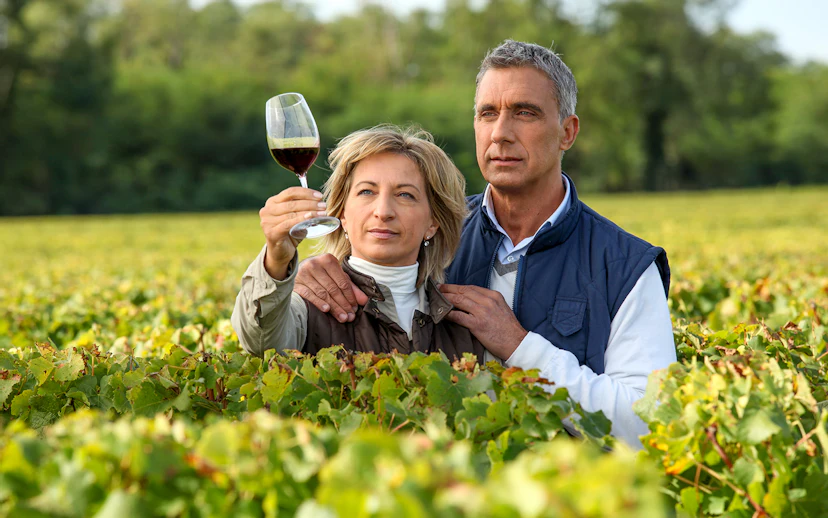
This is Provence at its most wine-focused: cellar visits, vineyard views, and a ruined papal castle above the village. The real value isn’t just drinking famous reds, but comparing producers and understanding how much the tasting changes with a guide handling appointments. Many visitors also forget that tastings need pacing if they’re stacking 2–3 wineries in one day.
Where to find it: North of Avignon, on Rhône Valley wine routes
Cassis and the Calanques
Type: Coastal town and boat-cruise stop
Cassis gives you a completely different Provence day — sea cliffs, harbor energy, and turquoise-water calanques instead of inland stone villages. The part people often misjudge is timing: if you don’t pre-book the boat cruise in summer, the town stop can become a long wait in the heat. It works best as a dedicated coastal day, not a rushed add-on to a big inland route.
Where to find it: Near Marseille, on coastal Provence itineraries
Facilities and accessibility
- 🎒 Cloakroom / lockers: Large luggage is a bad fit for Provence day trips because storage is usually minimal, so plan around a small day bag.
- 🚻 Restrooms: Restroom access usually comes at monument stops, village cafés, and scheduled breaks rather than on the vehicle.
- 🍽️ Cafés / restaurants: Most tours pause in villages or historic towns for lunch, but the quality and cost vary a lot by stop and route.
- 🪑 Seating / rest areas: You’ll find benches and café seating in larger stops like Avignon, Pont du Gard, and some village squares, but not consistently between them.
- 🅿️ Parking: Self-drive travelers will usually find parking outside village centers, since the prettiest old streets are often pedestrian-only or heavily restricted in summer.
- 🩺 First aid / medical support: Day tours don’t usually travel with medical staff, so guides rely on local services in the nearest town if something goes wrong.
- ♿ Mobility: Accessibility is partial, not seamless, because minibuses, cobbled lanes, slopes, and uneven village streets can make full routes difficult.
- 👁️ Visual impairments: Outdoor routes are manageable with support, but monument interpretation, rural paths, and village navigation are much easier with a companion or guide.
- 🧠 Cognitive and sensory needs: Summer routes can feel overstimulating because of heat, road time, crowd noise, and packed stops, so spring and fall are the gentler choice.
- 👨👩👧 Families and strollers: Strollers work in cities and some larger sites, but many hilltop villages and abbey approaches are not pushchair-friendly end to end.
This works best for school-age children and teens who can handle road time, short walks, and varied stops rather than one continuous attraction.
- 🕐 Time: A full day is realistic only if you limit the number of stops, because 8–10 hours with long transfers can wear younger children down.
- 🏠 Facilities: Family support varies by stop, so larger sites and towns are easier for diaper changes, snack breaks, and restrooms than smaller villages.
- 💡 Engagement: Roman sites, river stops, and boat cruises usually hold children’s attention better than back-to-back village walks.
- 🎒 Logistics: Bring water, sun protection, and a compact bag, and aim for an early start so you finish the most exposed stops before peak heat.
- 📍 After your visit: Cassis harbor or a low-key river stop near Pont du Gard tends to work better for families than adding one more hilltop village.
Rules and restrictions
What you need to know before you go
- Entry requirement: Most day trips require advance booking, and wine-focused itineraries usually require photo ID for tastings if you’re 18 or older.
- Bag policy: Bring only what you can comfortably carry all day, because storage for large luggage is usually limited or unavailable.
- Re-entry policy: If you leave a shared tour mid-route, you’ll usually need to make your own way back, which can be awkward from smaller villages with limited transport.

Not allowed
- 🚬 Smoking / vaping: Smoking and vaping aren’t permitted inside shared tour vehicles, so wait for scheduled stops.
- 🖐️ Touching monuments or restricted areas: Historic sites, abbeys, and protected heritage stops follow on-site rules, and guides will point out no-access areas before entry.

Photography
Photography is generally allowed on Provence day trips, especially in villages, vineyards, and outdoor viewpoints. The main restrictions tend to come inside specific monuments, museum rooms, chapels, or tasting spaces, where flash, tripods, and commercial-style setup may be limited. If rules change by stop, your guide will usually flag them before you go in.

Good to know
- Wine tastings: Not every Provence day trip includes tastings, so check whether cellar visits are part of the base price or an add-on.
- Summer exposure: Lavender fields, viewpoints, and village walks offer very little shade in July and August, so the heat changes the day more than many first-time visitors expect.
Practical tips
- Booking and arrival: Book village, lavender, and wine routes at least 1–2 weeks ahead for June–July and summer weekends, and arrive 15–30 minutes before departure because shared tours don’t wait for late arrivals the way museums sometimes do.
- Pacing: Don’t choose the fullest itinerary unless you genuinely want a road-trip day; 3 strong stops with lunch usually feel better than 5 rushed photo stops.
- Crowd management: If lavender is your priority, pick a weekday route and aim for late-afternoon field time, because the same noon slots bring the harshest light and the thickest crowds.
- What to bring or leave behind: A small day bag beats rolling luggage every time, especially in Gordes, Roussillon, and other villages with uneven lanes and limited storage.
- Food and drink: Eat a proper breakfast before departure, because some guests find the lunch break comes later than expected and included refreshments are often minimal.
- Route choice: Pick one Provence mood for the day — Roman history, Luberon villages, wine country, or coast — because combining inland villages with Cassis or heavy monument time usually creates more transit than enjoyment.
- Heat planning: In July and August, the difference between an 8am start and a midday departure is huge; the early route gives you cooler walking conditions at exposed stops like Sénanque Abbey and hilltop viewpoints.
What else is worth visiting nearby?
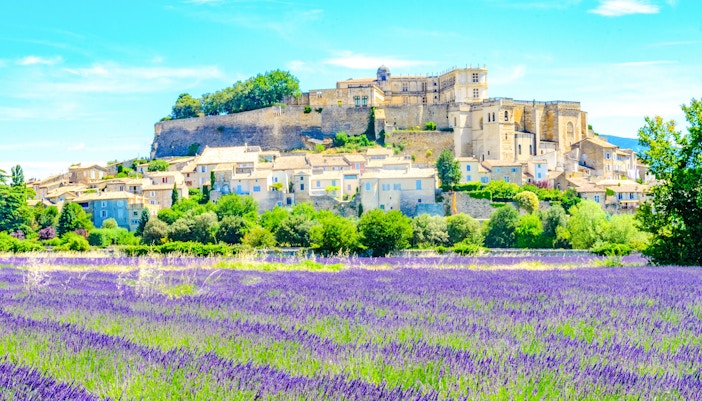
Commonly paired: Gordes
Distance: 50km — 40–60 min from Avignon
Why people combine them: Gordes fits naturally into a Provence day because it delivers the classic hilltop-village look, and it pairs well with Sénanque Abbey and Roussillon without forcing a major detour.
Book / Learn more
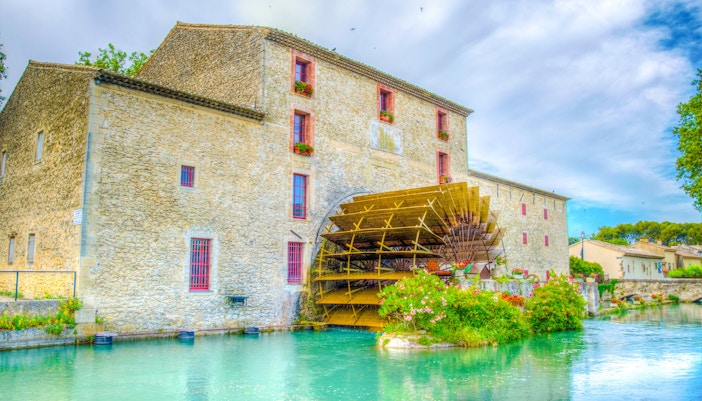
Commonly paired: Isle-sur-la-Sorgue
Distance: 35km — about 30 min from Avignon
Why people combine them: It works well as a softer, market-town counterpoint to the hill villages, especially if you want a lunch stop or a less exposed walking break.
Book / Learn more
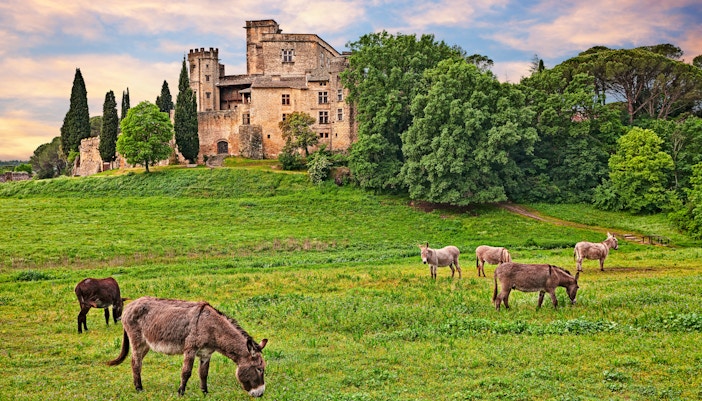
Also nearby
Lourmarin
Distance: 35km — about 35 min from Aix-en-Provence
Worth knowing: It’s one of the easiest Luberon stops to fold into a day from Aix, with a château, cafés, and a less vertical feel than Gordes.
Cassis
Distance: 100km — about 1 hr 15 min from Aix-en-Provence via Marseille
Worth knowing: Cassis is best treated as a dedicated coastal day, especially if you want a Calanques boat cruise rather than just a quick harbor stop.
Eat, shop and stay near day trips in Provence
- On-site: Not applicable for a region-wide day trip, because meals usually happen in whichever town or village your route includes.
- Better options nearby: Not applicable, since the best lunch stop depends entirely on whether you’re departing from Avignon, Aix-en-Provence, Marseille, or a village route.
- 💡 Pro tip: Eat breakfast before departure and don’t assume lunch will be early — multi-stop routes often reach the meal break after noon, especially on village or wine itineraries.
- Markets and local shops: Provence shopping is route-dependent, with the best browsing usually in village squares, wine estates, and town markets rather than one central gift shop.
- Worth buying: Wine, olive products, lavender goods, and local ceramics are the easiest buys to carry home from a day trip.
Yes — but only if you use the right base. Avignon is the most practical base for classic west-Provence day trips, Aix-en-Provence works well for Luberon routes, and Marseille makes the most sense if you want to mix inland Provence with Cassis or the coast.
- Price point: Avignon and Aix usually sit in the mid-range, while Marseille gives you a broader spread from budget stays to upscale waterfront hotels.
- Best for: Travelers on a short trip who want early departures and minimal backtracking do best by staying close to their departure city.
- Consider instead: Stay in Avignon for Pont du Gard, wine country, and west-Provence routes; choose Aix-en-Provence for village-heavy Luberon days; pick Marseille only if coastal add-ons matter more than centrality.
Frequently asked questions about visiting day trips in Provence
Most Provence day trips take 8–10 hours door to door, though half-day village or history routes can run closer to 5–6 hours. The day feels longest when you stack too many inland stops, because road time between villages adds up faster than first-time visitors expect.
Yes, it’s smart to book ahead for Provence day trips, especially in June, July, and on summer weekends. Shared tours can still show last-minute availability outside peak season, but lavender routes, wine tours, and smaller group departures are the first to fill.
Yes, skip-the-line access is worth it when your route includes major monuments like the Papal Palace or other headline heritage stops in peak season. On a multi-stop day, even a 20–30 minute queue can throw off lunch, photo timing, and the final stop.
Arrive 15–30 minutes before departure for most Provence day trips. Shared tours usually leave on time, and missing check-in is much harder to recover from here than at a single attraction because the whole route depends on fixed driving times.
Yes, but keep it small. A compact day bag is the safest option because luggage storage is usually limited, and you’ll likely carry your things across cobbled streets, parking lots, monument entries, and village steps.
Yes, photography is allowed at most Provence stops, especially outdoors in villages, vineyards, and viewpoints. Rules can change inside specific monuments, chapels, museums, or tasting spaces, so listen for stop-by-stop instructions from your guide.
Yes, Provence works well for groups, and you’ll find both shared and private formats. Small-group tours are better if you want flexibility and easier pacing, while private tours make more sense for families, mixed-age groups, or travelers with a very specific wishlist.
Yes, but the route matters. Families usually do best on shorter village, Roman-site, or coastal itineraries, while full-day multi-stop countryside tours can feel long for younger children because of the transfer time and midday heat.
It’s partly accessible, not fully accessible. Bigger monuments and city-based stops are usually easier to manage, but many village routes include uneven streets, slopes, and vehicle boarding that make full Provence day itineraries more difficult without advance planning.
Yes, food is usually available during the day, but not always when you want it. Most tours stop in towns or villages with cafés and restaurants, though some travelers find the lunch window later than expected, so breakfast matters.
Lavender usually blooms from mid-June to early July, with peak timing shifting slightly by location and weather. If the fields are your main reason for going, don’t leave it to chance — book a seasonal route during that window rather than a generic countryside tour.
Yes, but guided tours are usually the easiest way to do it well. Public transport can get you between big cities, but smaller villages, abbeys, and winery stops are much harder to link smoothly in one day without a car or organized transport.
More reads
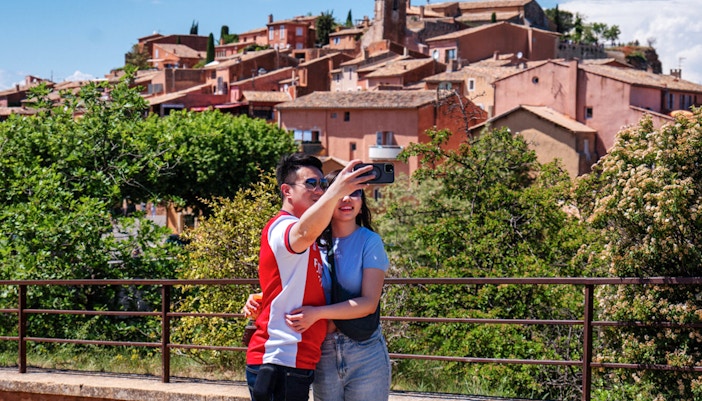
Provence day trips tickets
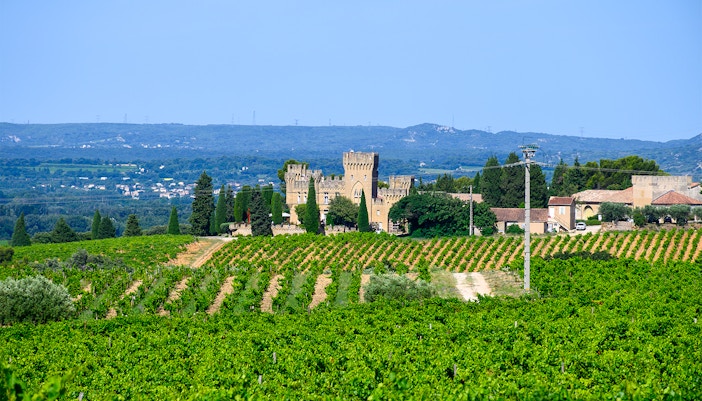
Provence highlights

Getting to Provence