Step out of Avignon, Aix-en-Provence, or Marseille and the scenery changes fast: plane trees give way to vineyards, ochre villages, Roman stone, and in summer, lavender fields that perfume the air before you even reach the next stop. The Provence region rewards movement; the pleasure is in how quickly one landscape becomes another.

This part of southern France was shaped by Romans, monastic orders, papal power, merchants, and farmers, and that layered history is why one route can include an aqueduct, a hilltop village, an abbey, and a winery. Distances are manageable, but the contrasts are sharp.

The payoff is variety without exhaustion. Few day trips in Provence let you photograph Pont du Gard, taste Châteauneuf-du-Pape, and still end the day in a market square or seaside harbor. You leave feeling you’ve seen several versions of southern France, not just one.

Skip it if: you dislike scenic drives with multiple short stops, or prefer to linger in one place all day.

What can you see on a day trip in the Provence region?

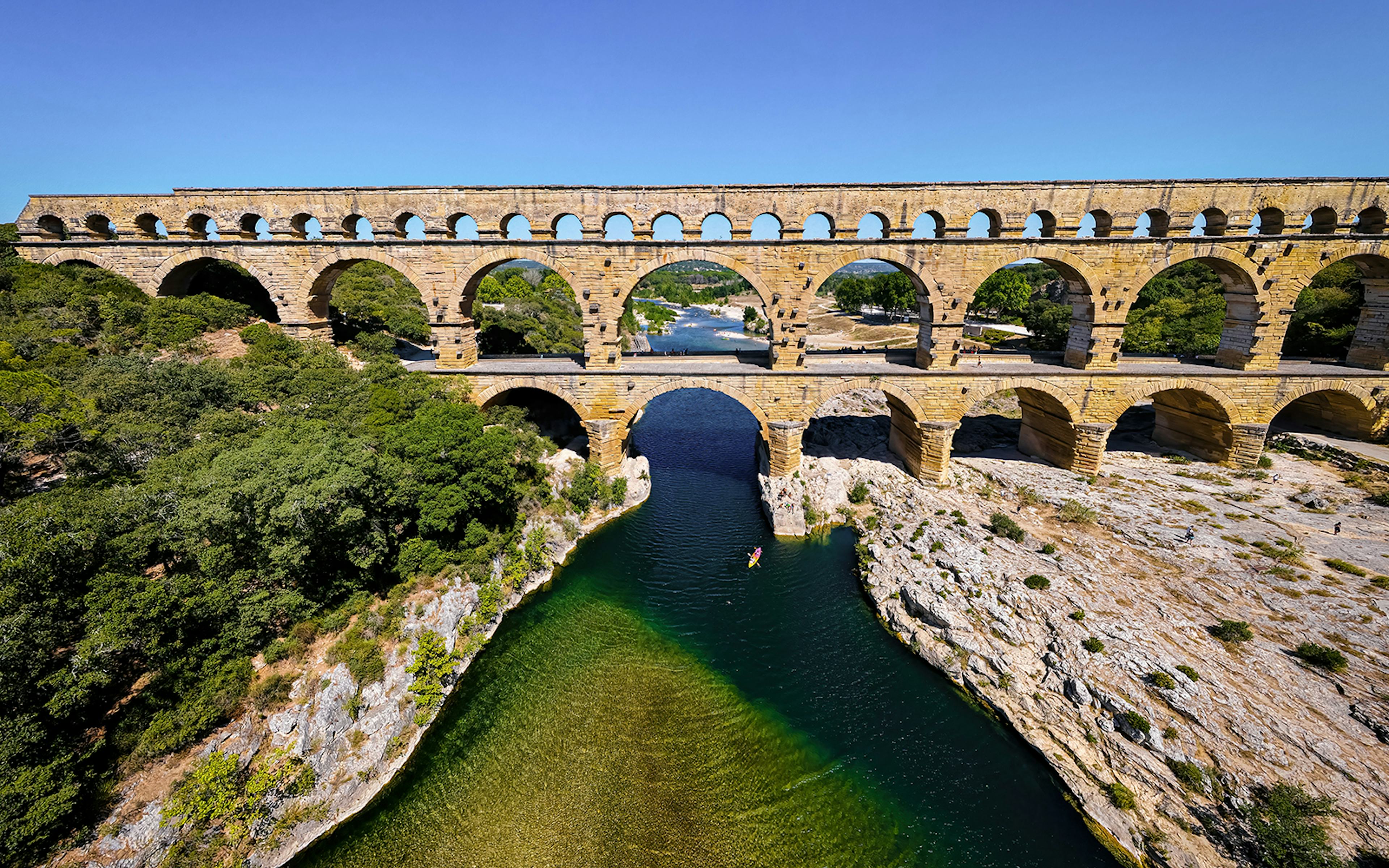
Pont du Gard aqueduct over river in Provence, France, seen on a guided tour from Avignon.
Palace of the Popes in Avignon, Provence, with historic architecture and courtyard.
Gordes village view with stone buildings and lush greenery in Provence, France.
Tourists walking through lavender fields in Provence, France, with Verdon Gorges in the background.
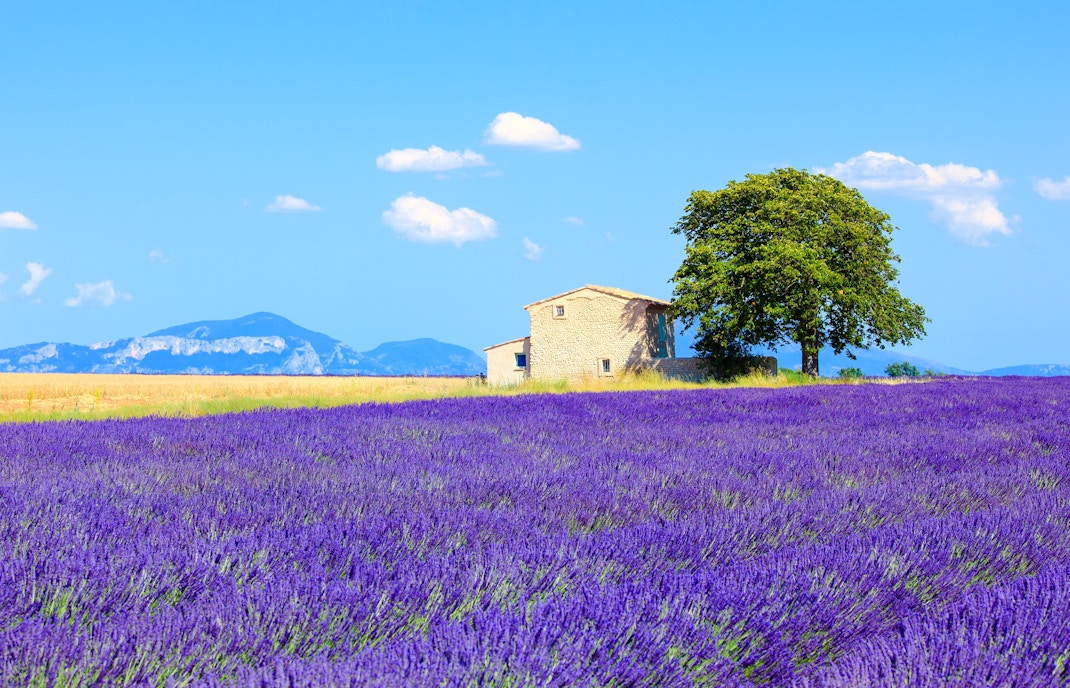
Woman walking through lavender fields in Valensole, Provence, with a stone house in the background.
Châteauneuf-du-Pape vineyard with stone house and tree, Mont Ventoux in background.
Boat tour along the coastline of Cassis, Provence with cliffs and waterfront houses.
1/7

Pont du Gard

The three-tiered Roman aqueduct is the clearest expression of Provence’s ancient past. Plan enough time to walk below the arches and across the site; many visitors underestimate how large the monument feels in person.

Avignon and the papal quarter

Medieval walls, broad squares, and the Palais des Papes make Avignon an easy heritage stop. It works especially well on mixed itineraries because you can see a lot on foot in a relatively short visit.

Gordes and Roussillon

These Luberon villages show two different sides of Provence: pale stone in Gordes, red ochre in Roussillon. Parking and viewpoints get busy by late morning, so early departures are worth it.

Sénanque Abbey and nearby lavender fields

This Cistercian abbey is one of Provence’s defining images in bloom season. The lavender window is short and weather-dependent, so summer departures that include it are always in stronger demand.

Sault or Valensole

These are the classic lavender landscapes: broad purple bands, farm stops, and small village shops. Which one you visit depends on bloom timing, with Sault usually peaking later because of its altitude.

Châteauneuf-du-Pape vineyards

Low stone walls, rolled galet stones, and cellar tastings make this one of the region’s strongest wine stops. Small-group tastings are easier to book in advance than to arrange spontaneously in peak season.

Cassis and the Calanques coast

For a completely different Provence, head south to the harbor, cliffs, and turquoise inlets near Cassis. Boat places can sell out in summer, so coastal routes reward earlier planning than inland village days.

Explore Provence Without the Planning Stress

Without a guide, Provence can turn into too much driving and too little context. The From Marseille: Pont du Gard, Avignon & Châteauneuf-du-Pape Day Trip with Wine Tasting combines Roman history, vineyard access, and logistics into one smooth, full-day route.

Village de L'Isle sur la Sorgue canal view with historic building, Provence.

How to Explore the Provence region

Classic Provence Villages & Heritage Route

Time needed

Budget 5–6 hours for a focused Provence loop and 9–10 hours for a fuller day that combines villages, Roman heritage, and a tasting stop. Routes from Avignon are usually more compact, while departures from Marseille involve longer transfer times.

Suggested route

Start with the farthest or most popular stop first while roads, viewpoints, and parking are still manageable. If lavender is your priority, head to the fields early for softer light and thinner crowds, then work back through villages or vineyards where lunch fits naturally. A balanced route pairs Pont du Gard with one Luberon village such as Gordes or Roussillon before ending with a cellar or market stop.

Must-see vs optional

Must-see: Pont du Gard, one Luberon hill village, and either a lavender-field stop or winery visit depending on the season.
Optional: Cassis or Bandol for coastal views and wine tasting. These add roughly 2 extra hours including transfers.

Guided vs self-paced

Guided tours add real value in Provence. Public transport between villages is limited, bloom timing changes week to week, and parking fills quickly during summer. A good tour lets you cover more ground without spending the day navigating rural roads.
Lavender, Wine & Scenic Provence Day Trips

Time needed

Budget 8–10 hours for a classic Provence day trip covering 3 or 4 stops, or about 5 hours for a single-focus outing such as lavender fields, wine tasting, or the Cassis coastline. The biggest time factor is transfer distance between regions.

Suggested route

Choose one corridor instead of crossing the entire region in a single day. From Avignon, combine Pont du Gard with Châteauneuf-du-Pape or nearby villages. From Aix-en-Provence, focus on the Luberon or lavender country. From Marseille, keep coastal stops like Cassis and Bandol together. Start with viewpoints or villages first, then leave wineries and relaxed browsing for the afternoon.

Must-see vs optional

Must-see: Gordes or Roussillon, one winery or lavender-field stop, and either Pont du Gard or a Provençal market town.
Optional: Sénanque Abbey, Moustiers-Sainte-Marie, or Cassis harbor. Each typically adds 45–90 minutes plus driving time.

Guided vs self-paced

Self-driving works well if you want one clear theme and are comfortable with rural roads. For multi-stop itineraries, guided tours are usually more efficient because parking is limited, seasonal routes shift frequently, and winery visits are easier when logistics are handled for you.

Brief history of Provence

  • 6th century BC: Greek settlers found Massalia, today’s Marseille, opening Provence to Mediterranean trade and cultural exchange.
  • 1st century BC: Rome consolidates the region and builds roads, arenas, bridges, and aqueducts, including Pont du Gard.
  • 12th century: Monastic communities and fortified hilltop settlements expand across the countryside, shaping abbeys and villages still central to day-trip routes.
  • 14th century: Avignon becomes the seat of the papacy, giving Provence major political and religious influence.
  • 19th century: Rail links, vineyard growth, and artists such as Van Gogh and Cézanne help define Provence’s wider cultural identity.
  • Today: Provence remains known for Roman heritage, market towns, wine country, and seasonal lavender landscapes within easy reach of one another.

One detail that changes a Provence day trip more than most first-timers expect is the market calendar. Towns such as Saint-Rémy-de-Provence, Gordes, and L’Isle-sur-la-Sorgue feel completely different on market mornings, when squares fill with cheese stalls, linens, olives, soaps, and produce. The same village that seems quiet at 8am can be crowded by 11am and nearly empty again after lunch. If your priority is atmosphere, plan around a market day. If your priority is photos and easy parking, avoid it and arrive early instead.

Frequently Asked Questions About the Provence region

Yes, Provence works exceptionally well for day trips because the scenery changes fast — Roman monuments, vineyards, hilltop villages, and coast — without marathon travel days. Guided departures from Avignon, Aix-en-Provence, and Marseille simplify logistics. See tour options.