Is Hôtel de Caumont worth visiting?

Yes, especially if you want art without the fatigue of a large museum. Hôtel de Caumont feels quiet, polished, and unmistakably Aix: a courtyard entrance, 18th-century salons, exhibition rooms, formal gardens, and a café that turns the visit into a slow cultural pause.

It was built to display status in the Mazarin quarter, and that ambition still shapes the experience. You feel it in the symmetry of the house, the decorative interiors, and the shift from public courtyard to private garden.

The payoff is atmosphere. You leave with a sense of how art, architecture, and Aix’s social history overlap in one compact place.

Skip it if you only want a vast permanent collection or have no interest in historic interiors, gardens, or temporary exhibitions.

What to see at Hôtel de Caumont

Visitor admiring artwork at Caumont Centre d’Art in Aix-en-Provence.
Elegant room with ornate decor and paintings at Caumont Centre d’Art, Aix-en-Provence.
Fountain with dolphin sculptures at Caumont Centre d’Art, Aix-en-Provence.
Interior of a theater at Caumont Centre d’Art with empty seats facing a large screen.
Outdoor café seating in the garden of Caumont Centre d’Art, Aix-en-Provence.
Courtyard garden at Caumont Centre d’Art with potted flowers and outdoor seating.
Person viewing art book at Caumont Centre d’Art.
1/7

Temporary exhibition rooms

The main draw changes with each exhibition, so this is the part of the visit that feels most current. In 2026, the Toulouse-Lautrec exhibition brings Belle Époque posters, portraits, cabaret culture, and Montmartre nightlife into the setting of an 18th-century mansion.

Historic salons

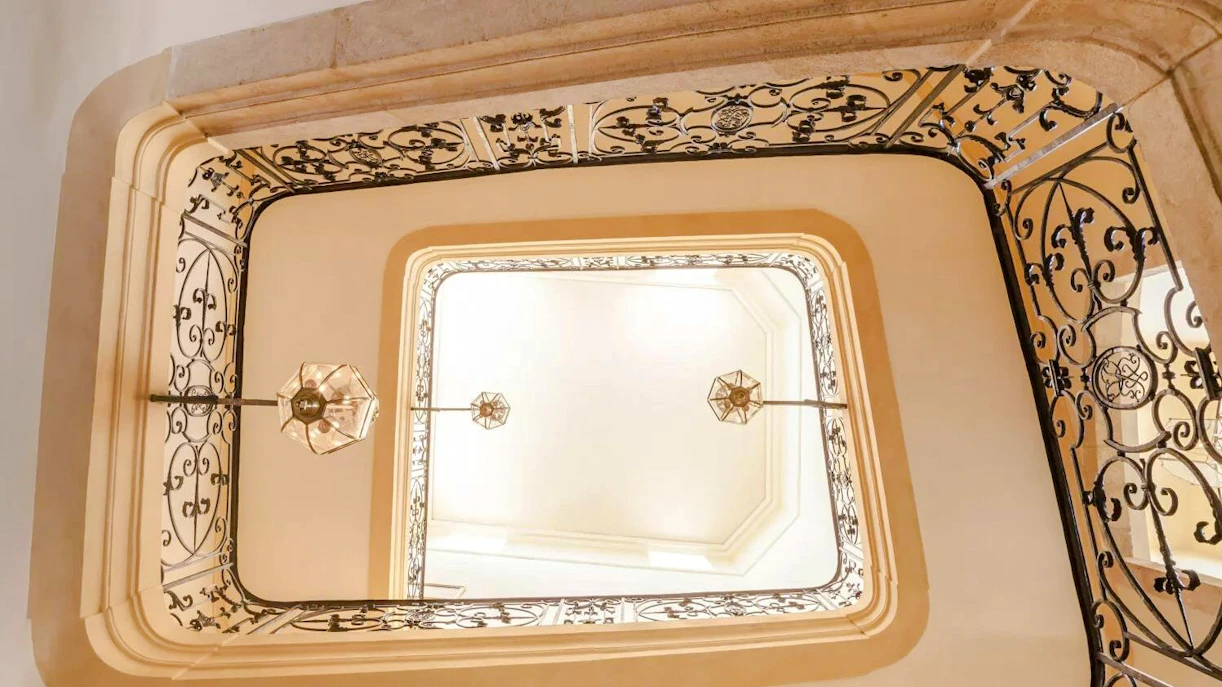
These restored rooms show how Aix’s aristocratic homes once looked and functioned. Expect decorative details, period-style furnishings, painted ceilings, and elegant room layouts that add a house-museum layer beyond the temporary exhibition.

French gardens

The upper and lower gardens offer a quiet break from the city center. With clipped boxwood, water features, symmetry, and long sightlines, they show the formal garden style designed to frame the mansion and create a sense of calm.

Cézanne film

The daily film adds useful regional context to the visit. It connects Aix-en-Provence with Cézanne’s life, work, and landscapes, helping visitors understand why the city and surrounding countryside became so central to his art.

Café Caumont

Café Caumont is more than a convenient refreshment stop. Set on the ground floor with views toward the gardens, it extends the mansion experience through its setting, terrace atmosphere, and slower pace after the exhibition.

Courtyard approach

The courtyard sets the tone before you enter the mansion. It shows how architecture, arrival, and social status were staged in 18th-century Aix, giving visitors a first look at the building’s scale and symmetry.

Gift and bookshop

Located in the former library, the shop is useful for exhibition catalogues, art books, prints, cards, and design-led souvenirs. It is especially worth browsing if you want something tied to the current temporary show.

How to explore Hôtel de Caumont

Duration:

Budget 1.5 to 2.5 hours, depending on whether you add the film, café, gardens, shop, or audio guide. Start with the temporary exhibition while your focus is highest, then move into the historic salons to understand the mansion’s 18th-century character.

Suggested route:

Enter through the courtyard, visit the exhibition rooms first, continue through the restored salons, then pause in the French gardens. If you are following Aix’s art story, add the Cézanne film before ending at Café Caumont or the shop.

Must-see:

The temporary exhibition, historic salons, French gardens, and courtyard approach. If you are short on time, prioritize those four. Save the film, café, and bookshop for after the galleries, when you can slow down without watching the clock properly.

Guided vs self-paced:

Self-paced works for a relaxed visit, but the audio guide or guided tour adds value if the exhibition is your main reason for booking.

Brief history of Hôtel de Caumont

  • 1646: Archbishop Michel Mazarin oversees the creation of the Mazarin quarter, designed as an elegant district for Aix’s elite.
  • 1715: François Rolland de Réauville commissions the mansion. Robert de Cotte designs it, with Georges Vallon directing construction locally.
  • 1758: François Bruny de la Tour-d’Aigues buys the residence, then known as Hôtel de Bruny.
  • 1796: Pauline de Caumont inherits the mansion, giving it the name used today.
  • 1964: Aix-en-Provence acquires the building and later uses it as a music and dance conservatoire.
  • 2010: Culturespaces becomes owner and begins restoration.
  • 2015: Caumont opens as an art centre.

Who built Hôtel de Caumont?

Hôtel de Caumont was designed by Robert de Cotte, first architect to the King and administrator of the Bâtiments du Roi. Construction began in 1715 under Aix architect Georges Vallon. François Rolland de Réauville commissioned the residence to assert status in the new Mazarin quarter.

Frequently asked questions about Hôtel de Caumont

Yes, if you enjoy art, architecture, gardens, and refined historic settings. It works best as a compact cultural break rather than a large museum, with the current exhibition shaping much of the value.